Contact us for timely diagnosis, expert guidance, and compassionate heart care.
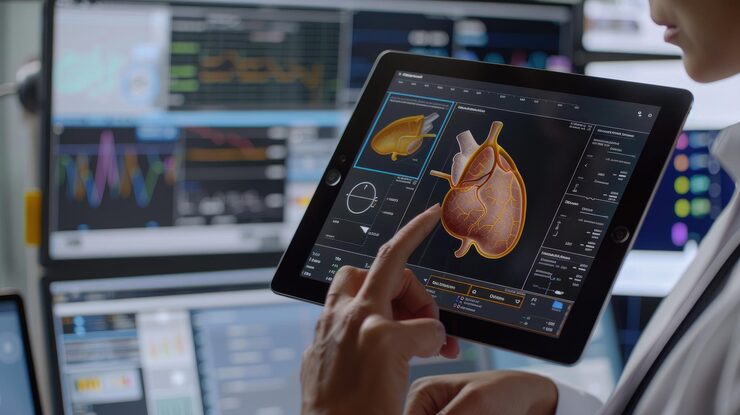
Strain Imaging, also known as Myocardial Strain Echocardiography, is an advanced cardiac imaging technique used to evaluate the heart muscle’s subtle deformation and contractile function. Under the expert supervision of Dr. Vinodh Kumar K, strain imaging is performed using state-of-the-art echocardiography systems and standardized protocols to ensure highly precise and reproducible results.
Strain imaging enables early detection of heart muscle dysfunction—even before changes are visible on routine echocardiography. It plays a crucial role in identifying early heart disease, monitoring treatment effects, and guiding timely clinical decisions for optimal cardiac care.
The heart’s pumping efficiency depends not only on visible movement but also on microscopic muscle fiber shortening and relaxation. Strain imaging measures these subtle changes, helping detect early myocardial impairment and supporting proactive heart health management.
Strain imaging quantitatively assesses how heart muscle fibers shorten, thicken, and relax during each heartbeat. It provides objective measurements of myocardial function, including global longitudinal strain (GLS), which is a sensitive marker of early heart dysfunction.
Dr. Vinodh Kumar K commonly recommends strain imaging to evaluate patients with borderline or early heart disease, unexplained symptoms, or conditions that may silently affect heart muscle performance.
The test is non-invasive, radiation-free, and painless, making it safe for repeated use during follow-up and long-term cardiac monitoring.
Strain imaging is especially useful in diagnosing and monitoring:
Early left ventricular dysfunction
Coronary artery disease with subtle myocardial ischemia
Cardiomyopathies (hypertrophic, dilated, restrictive)
Chemotherapy-related cardiotoxicity
Heart failure with preserved or reduced ejection fraction
Valvular heart disease impact on heart muscle
Hypertension-related myocardial changes
Based on strain imaging findings, Dr. Vinodh Kumar K may recommend treatment optimization, closer follow-up, or additional investigations such as stress echocardiography or cardiac MRI.
Strain imaging is advised for patients with symptoms such as unexplained fatigue, breathlessness, or reduced exercise tolerance—even when routine echocardiography appears normal. It is also strongly recommended for patients undergoing chemotherapy, those with long-standing hypertension or diabetes, and individuals with a family history of cardiomyopathy.
The test is increasingly used for early diagnosis, risk stratification, and monitoring disease progression or treatment response.
Strain imaging under Dr. Vinodh Kumar K is performed as part of a comprehensive echocardiographic examination in a comfortable, patient-focused environment. High-quality image acquisition, precise software-based analysis, and standardized reporting ensure reliable and clinically meaningful results.
Each study is carefully interpreted, and patients receive a clear explanation of findings, along with personalized recommendations for lifestyle modification, medical therapy, or further evaluation when necessary.
Advanced echocardiography and strain analysis technology
Expertise in early detection of myocardial dysfunction
Evidence-based interpretation and clinical correlation
Strong focus on preventive cardiology and risk reduction
Clear patient communication and longitudinal care approach
Seamless integration with comprehensive cardiac services
Dr. Vinodh Kumar K offers advanced strain imaging as a key component of modern cardiac evaluation. With a focus on early diagnosis, precision imaging, and patient-centered care, he helps identify heart disease at its earliest stage—when intervention is most effective.
Detecting heart dysfunction early can change outcomes—and strain imaging is a powerful tool in proactive cardiac care.

Habitant augue molestie felis purus platea mollis mauris lectus cursus. Siverra scelerisque commodo sem nisi sed vitae in neque volutpat.