Contact us for timely diagnosis, expert guidance, and compassionate heart care.
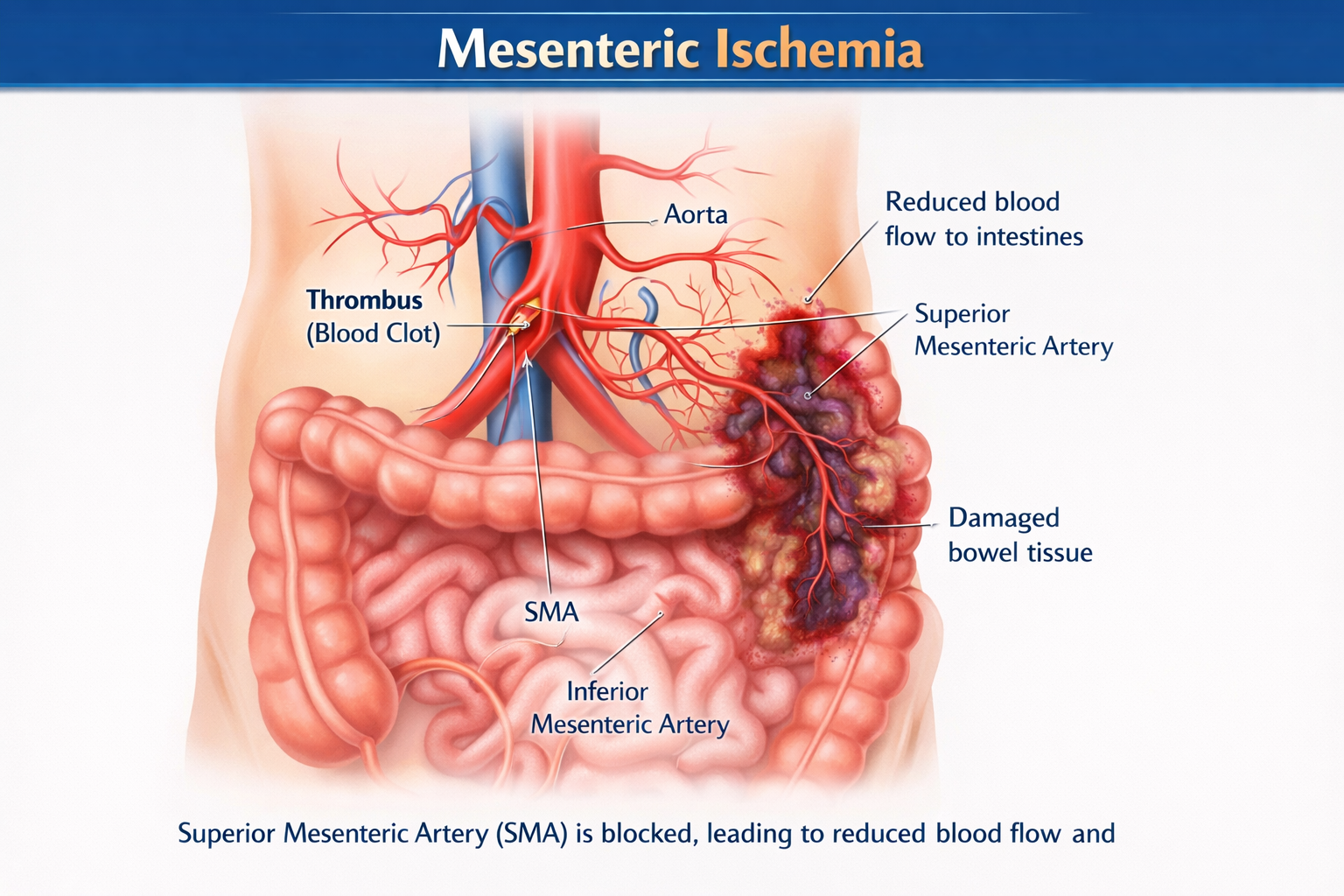
Mesenteric ischemia is a serious vascular condition caused by reduced blood flow to the intestines, leading to intestinal injury and potentially life-threatening complications if not treated promptly. Under the expert care of Dr. Vinodh Kumar K, patients with suspected mesenteric ischemia receive urgent evaluation, accurate diagnosis, and evidence-based management to restore blood flow and protect intestinal function.
Mesenteric ischemia may present suddenly or develop gradually over time. Early recognition and timely intervention are critical to preventing bowel damage, sepsis, and mortality.
The intestines receive blood supply through mesenteric arteries and veins. Mesenteric ischemia occurs when this blood flow is compromised due to narrowing, blockage, or clot formation.
There are two main forms:
Acute mesenteric ischemia – sudden interruption of blood flow, often due to an embolus or arterial thrombosis, and represents a medical emergency
Chronic mesenteric ischemia – gradual reduction in blood flow, usually due to atherosclerosis, leading to recurrent symptoms over time
Both forms reduce oxygen delivery to the intestines and require expert vascular assessment.
Evaluation focuses on identifying the cause, location, and severity of reduced intestinal blood flow and determining the urgency of treatment. Dr. Vinodh Kumar K follows a structured diagnostic approach to rapidly differentiate acute from chronic ischemia and assess the risk of intestinal injury.
Early diagnosis helps prevent bowel infarction, perforation, systemic infection, and long-term digestive complications.
Mesenteric ischemia may be associated with:
Atherosclerosis and peripheral vascular disease
Atrial fibrillation and other cardiac embolic sources
Heart failure or low blood flow states
Blood clotting disorders
Long-standing diabetes, smoking, and high cholesterol
Previous vascular disease or surgery
Patients with significant cardiovascular risk factors are at higher risk and require prompt evaluation when symptoms arise.
Symptoms of Acute Mesenteric Ischemia may include:
Sudden, severe abdominal pain
Pain disproportionate to physical findings
Nausea, vomiting, or diarrhea
Bloody stools
Signs of shock in severe cases
Symptoms of Chronic Mesenteric Ischemia may include:
Recurrent abdominal pain after meals
Fear of eating due to pain
Unintentional weight loss
Diarrhea or bloating
Any sudden or severe abdominal pain requires immediate medical attention.
Management under Dr. Vinodh Kumar K includes rapid clinical assessment and appropriate investigations to evaluate intestinal blood flow and overall cardiovascular status. Treatment strategies are individualized based on whether the condition is acute or chronic.
Care focuses on restoring blood supply, preventing clot progression, managing cardiovascular risk factors, and coordinating advanced vascular or interventional care when required. Patients and families receive clear explanations, timely decision-making support, and structured follow-up.
Expertise in diagnosing complex vascular ischemic conditions
Rapid, evidence-based evaluation and treatment planning
Strong focus on early intervention and complication prevention
Integrated cardiac and vascular risk management
Clear patient communication and compassionate care
Access to comprehensive cardiac and vascular services
Dr. Vinodh Kumar K provides expert evaluation and management of mesenteric ischemia with an emphasis on early detection, timely intervention, and long-term vascular protection. Prompt and specialized care can be lifesaving and prevent serious intestinal complications.
Severe abdominal pain may signal vascular emergency—early expert care saves lives.