Contact us for timely diagnosis, expert guidance, and compassionate heart care.
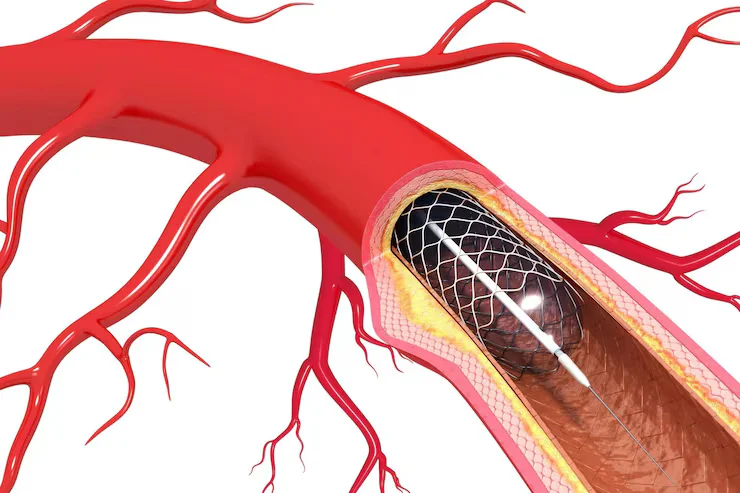
A Peripheral Angiogram is a specialized diagnostic procedure used to visualize the blood vessels supplying the legs, arms, kidneys, and other peripheral organs. Under the expert care of Dr. Vinodh Kumar K, peripheral angiography is performed using advanced imaging technology and standardized clinical protocols to accurately detect narrowing, blockages, or abnormalities in peripheral arteries.
This procedure plays a crucial role in diagnosing peripheral vascular disease and guiding further treatment such as angioplasty, stenting, or advanced endovascular interventions.
Peripheral arteries carry oxygen-rich blood from the heart to the limbs and vital organs. Over time, these arteries may become narrowed or blocked due to atherosclerosis, blood clots, or vascular inflammation, leading to reduced blood flow.
A peripheral angiogram involves injecting a contrast dye into the blood vessels through a thin catheter, usually inserted via the groin or arm. Real-time X-ray imaging then allows precise visualization of blood flow, helping identify the exact location and severity of vascular disease.
The primary purposes of peripheral angiography are to:
Identify arterial narrowing or blockages
Diagnose peripheral artery disease (PAD)
Evaluate limb ischemia or non-healing ulcers
Assess blood flow in renal, mesenteric, or upper limb arteries
Guide planning for angioplasty, stenting, or surgery
Evaluate vascular causes of pain, ulcers, or limb weakness
Dr. Vinodh Kumar K recommends a peripheral angiogram when non-invasive tests suggest significant vascular disease or when symptoms indicate compromised blood circulation.
A peripheral angiogram may be advised for patients with:
Leg pain while walking (claudication)
Non-healing foot or leg ulcers
Coldness, discoloration, or numbness in limbs
Suspected acute or chronic limb ischemia
Renal artery stenosis or mesenteric ischemia
Abnormal Doppler or imaging test results
Early diagnosis helps prevent complications such as tissue damage, limb loss, or organ dysfunction.
Under Dr. Vinodh Kumar K, peripheral angiography is performed in a modern catheterization laboratory under local anesthesia with continuous monitoring. The procedure is minimally invasive and generally well tolerated.
Patients are closely observed after the procedure and receive clear guidance on recovery, medications, and further treatment options based on angiographic findings.
Gold-standard test for evaluating peripheral arteries
High accuracy in identifying blockages and vessel anatomy
Enables precise treatment planning
Minimally invasive with short recovery time
Can be combined with angioplasty or stenting if required
Expertise in diagnostic and interventional vascular procedures
Use of advanced catheter-based imaging technology
Evidence-based patient selection and evaluation
Strong focus on safety and diagnostic accuracy
Clear patient communication and post-procedure guidance
Access to comprehensive cardiac and vascular care services
Dr. Vinodh Kumar K provides expert peripheral angiography services with a focus on accurate diagnosis, patient safety, and timely intervention. Early detection of peripheral vascular disease through angiography can prevent serious complications and preserve limb and organ health.
Understanding blood flow is the first step toward restoring circulation and protecting limbs.
Habitant augue molestie felis purus platea mollis mauris lectus cursus. Siverra scelerisque commodo sem nisi sed vitae in neque volutpat.