Contact us for timely diagnosis, expert guidance, and compassionate heart care.
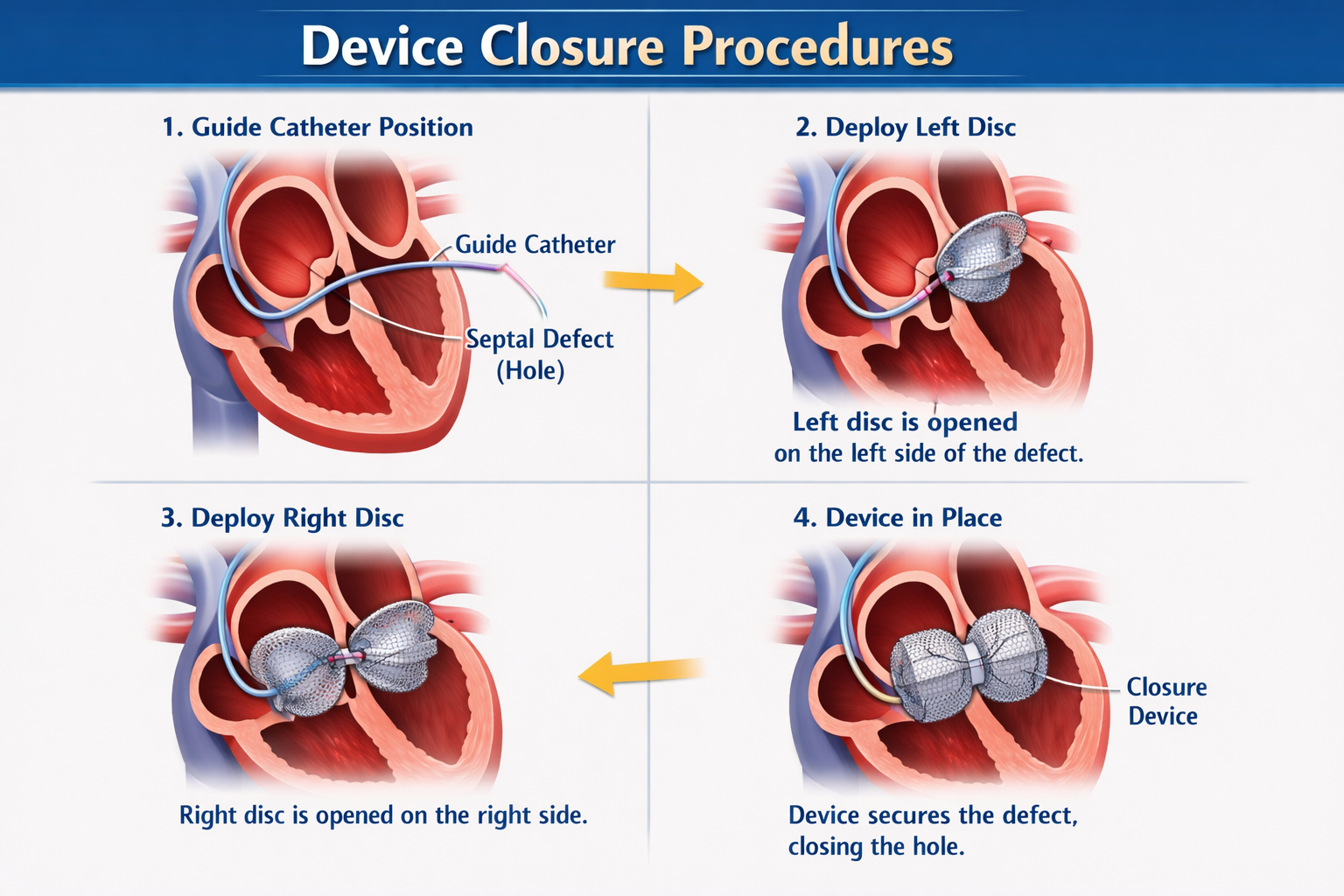
Device closure procedures for ASD, VSD, and PDA are minimally invasive cardiac interventions used to treat congenital heart defects without the need for open-heart surgery. Under the expert care of Dr. Vinodh Kumar K, these procedures are performed using advanced catheter-based techniques and evidence-based protocols to ensure safety, precision, and excellent clinical outcomes.
Device closures help correct abnormal blood flow between heart chambers or blood vessels, reducing strain on the heart and lungs and improving long-term heart function and quality of life.
Congenital heart defects occur when the heart or blood vessels do not form normally before birth. Common defects treated with device closure include:
Atrial Septal Defect (ASD): A hole between the upper chambers of the heart
Ventricular Septal Defect (VSD): A hole between the lower chambers of the heart
Patent Ductus Arteriosus (PDA): A persistent blood vessel connection between the aorta and pulmonary artery
If left untreated, these defects can lead to breathlessness, recurrent infections, heart failure, pulmonary hypertension, or rhythm disorders later in life.
The primary goal of device closure is to eliminate abnormal blood flow within the heart or major vessels while avoiding the trauma of open surgery. Dr. Vinodh Kumar K carefully evaluates each patient to determine whether a defect is suitable for transcatheter device closure based on size, location, anatomy, and clinical impact.
These procedures are especially beneficial for children and adults with suitable defects, offering faster recovery and minimal scarring.
Device closure procedures are recommended for selected patients with:
Secundum-type atrial septal defects
Small to moderate ventricular septal defects
Patent ductus arteriosus causing symptoms or heart strain
Evidence of heart chamber enlargement or increased lung pressure
Recurrent respiratory infections or exercise intolerance
Proper patient selection ensures optimal safety and long-term success.
Device closure may be advised when patients experience:
Breathlessness or easy fatigability
Poor growth or recurrent chest infections (in children)
Heart murmurs with evidence of shunt
Enlargement of heart chambers on imaging
Pulmonary hypertension due to congenital shunts
Early intervention prevents irreversible heart and lung damage.
Care under Dr. Vinodh Kumar K includes comprehensive evaluation using echocardiography, Doppler studies, and advanced imaging to assess defect size and suitability for closure.
The procedure is performed through a catheter inserted via a blood vessel, usually from the groin, under imaging guidance. After closure, patients are closely monitored and provided with clear instructions regarding medications, activity, and follow-up care to ensure proper healing and device integration.
Expertise in congenital and structural heart interventions
Minimally invasive, catheter-based treatment approach
Evidence-based patient selection and planning
Reduced hospital stay and faster recovery
Clear patient and family communication
Access to comprehensive pediatric and adult cardiac care
Dr. Vinodh Kumar K offers expert evaluation and management for patients requiring device closure of ASD, VSD, or PDA. With advanced techniques, careful planning, and personalized care, these procedures provide safe and effective correction of congenital heart defects.
Closing heart defects without open surgery—modern solutions for lifelong heart health.
Habitant augue molestie felis purus platea mollis mauris lectus cursus. Siverra scelerisque commodo sem nisi sed vitae in neque volutpat.