Contact us for timely diagnosis, expert guidance, and compassionate heart care.
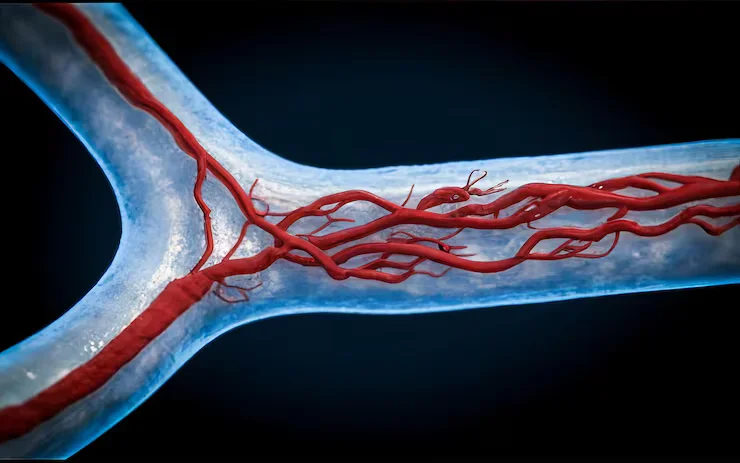
Venoplasty and Arteriovenous (AV) Fistula interventions are specialized endovascular procedures used to restore and maintain healthy blood flow in veins and dialysis access sites. Under the expert care of Dr. Vinodh Kumar K, these minimally invasive interventions are performed using advanced imaging guidance and evidence-based protocols to ensure long-term access patency, symptom relief, and improved patient outcomes.
These procedures play a critical role in patients with kidney disease requiring dialysis, as well as in individuals with venous narrowing or blockage affecting blood circulation.
Veins may become narrowed or blocked due to repeated needle punctures, scarring, blood clots, or long-standing vascular disease. Similarly, AV fistulas—surgically created connections between an artery and a vein for dialysis—can develop stenosis (narrowing), reduced flow, or clot formation over time.
Venoplasty involves widening a narrowed vein using a balloon catheter to restore normal blood flow.
AV fistula interventions aim to maintain or improve dialysis access by correcting blockages or narrowing within the fistula or associated veins.
These minimally invasive techniques help avoid surgical revision and prolong the life of existing vascular access.
The primary goals of these interventions are to:
Restore adequate venous blood flow
Maintain functional dialysis access
Reduce swelling, pain, and pressure in the limb
Prevent access failure and repeated surgeries
Improve quality of life and dialysis efficiency
Dr. Vinodh Kumar K carefully evaluates each patient to determine the most appropriate intervention based on vascular anatomy, access function, and overall health status.
These procedures are commonly recommended for patients with:
AV fistula or graft narrowing
Reduced dialysis flow or poor dialysis adequacy
Arm or hand swelling related to venous obstruction
Recurrent clotting of dialysis access
Central vein stenosis
Venous outflow obstruction
Early intervention helps prevent complete access failure and serious complications.
Venoplasty or AV fistula intervention may be advised when patients experience:
Difficulty during dialysis sessions
Reduced thrill or bruit over the fistula
Prolonged bleeding after needle removal
Swelling of the arm, neck, or face
Recurrent access-related complications
Timely evaluation and treatment can preserve existing access and avoid emergency dialysis situations.
Care under Dr. Vinodh Kumar K includes detailed vascular assessment using imaging and flow evaluation to identify the exact site and severity of narrowing.
The procedure is performed through a small catheter inserted into the blood vessel under imaging guidance. After intervention, patients are monitored closely and provided with clear instructions on access care, medication use, and follow-up to ensure long-term success.
Expertise in dialysis access and venous interventions
Minimally invasive, catheter-based treatment approach
Evidence-based procedural planning and execution
Focus on preserving long-term vascular access
Clear patient communication and education
Access to comprehensive cardiac and vascular care services
Dr. Vinodh Kumar K provides expert evaluation and management for venoplasty and AV fistula-related interventions with a strong emphasis on access preservation, patient safety, and long-term vascular health. Early intervention helps ensure uninterrupted dialysis and improved quality of life.
Protecting dialysis access means protecting life—expert vascular care makes the difference.
Habitant augue molestie felis purus platea mollis mauris lectus cursus. Siverra scelerisque commodo sem nisi sed vitae in neque volutpat.