Contact us for timely diagnosis, expert guidance, and compassionate heart care.
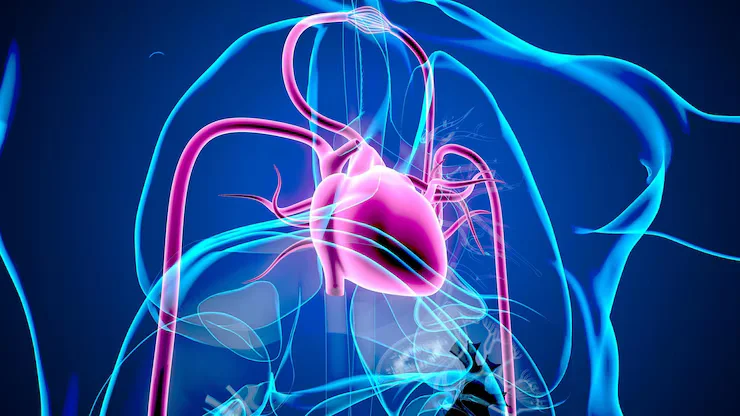
An Inferior Vena Cava (IVC) filter is a specialized medical device used to prevent life-threatening pulmonary embolism (PE) in patients with deep vein thrombosis (DVT) who are at high risk or unable to receive standard anticoagulant therapy. Under the expert care of Dr. Vinodh Kumar K, IVC filter placement is performed using minimally invasive, image-guided techniques to ensure accuracy, safety, and optimal protection.
IVC filters act as a protective barrier, trapping blood clots before they can travel from the lower limbs to the lungs, thereby reducing the risk of sudden and fatal complications.
The inferior vena cava is the large vein that carries blood from the lower body back to the heart and lungs. In patients with DVT, clots formed in the leg veins can dislodge and travel to the lungs, causing pulmonary embolism.
An IVC filter is a small, cone-shaped device placed inside the inferior vena cava through a catheter, usually inserted via a vein in the groin or neck. The filter allows normal blood flow while capturing large clots and preventing them from reaching the lungs.
The primary purpose of an IVC filter is to prevent pulmonary embolism in patients who:
Cannot take blood-thinning medications
Have recurrent clots despite anticoagulation
Are at high risk of bleeding
Require temporary protection during high-risk periods
Dr. Vinodh Kumar K carefully evaluates each patient to determine whether an IVC filter is necessary and whether it should be temporary or permanent.
IVC filters may be advised in patients with:
Acute deep vein thrombosis with contraindication to anticoagulation
Recurrent pulmonary embolism despite adequate treatment
High-risk trauma or surgical patients
Severe bleeding risk
Massive DVT with high embolic potential
Patient selection is critical to ensure maximum benefit and minimal risk.
IVC filter placement is considered when:
Blood thinners cannot be safely used
There is active bleeding or recent major surgery
Pulmonary embolism risk is extremely high
Temporary clot protection is required
In many cases, filters are designed to be retrievable and removed once the risk period has passed.
Care under Dr. Vinodh Kumar K includes detailed clinical assessment and imaging to confirm the need for filter placement. The procedure is performed under local anesthesia using real-time imaging guidance, ensuring minimal discomfort and rapid recovery.
After placement, patients are closely monitored and followed up to assess filter position, clot protection, and the possibility of safe filter removal when appropriate. Clear guidance is provided regarding medications, activity, and long-term prevention strategies.
Expertise in thromboembolic disease management
Precision-guided, minimally invasive procedures
Evidence-based decision-making for filter use and retrieval
Strong focus on patient safety and complication prevention
Clear patient communication and structured follow-up
Access to comprehensive cardiac and vascular care services
Dr. Vinodh Kumar K provides expert evaluation and management for patients requiring IVC filter placement, ensuring timely protection against pulmonary embolism while planning safe long-term care. With accurate assessment and careful follow-up, IVC filters offer critical, life-saving protection in high-risk situations.
When blood clots pose a serious threat, IVC filters provide a vital line of defense.

Habitant augue molestie felis purus platea mollis mauris lectus cursus. Siverra scelerisque commodo sem nisi sed vitae in neque volutpat.